Organisational Change Management
Effective Organisational Change Management (OCM) is key to the success of a software implementation. HKA utilises proven methodologies to create a clear vision for the change; identify internal and external skills needed; define incentives; allocate resources; and develop a comprehensive action plan from start to finish.
Proven approaches to OCM
HKA provides advice to Clients on OCM and takes a number of roles in the OCM process, according to the requirements of each Client. We utilise a number of proven methodologies to tailor the approach to each Client’s circumstances. Sometimes we are asked to lead the OCM process, which we have done on large implementation projects such as Stanford Health. More typically, OCM is led by the Client, with HKA providing advice and assistance. Every one of our 500+ software implementations has involved some form of organisational change. We bring those learnings to each new implementation.
Understanding the Landscape
Planning for effective change management starts with Clients asking and answering some key questions about their own organisation, people and objectives. These include:
- Speed of adoption – How quickly do the individuals in our organisation adopt new processes or behaviours?
- Maximum utilisation – How do we ensure that all individuals work to the desired outcome?
- Proficiency – Do the individuals in our organisation have the capability to effectively follow the new processes or behaviours?
- Mitigating people risk – What measures are in place to manage the lack of trust between leadership and individuals impacted by the initiative, attempts to sabotage or misuse the change initiative, or additional training and coaching support?
- Benefits realisation & change capability – Are we measuring individuals’ commitment and energy to work differently through the incorporated organisational changes? Do we understand the real impact that the change has on the tangible outcomes of our organisation?
We work closely with each Client to ensure that the necessary tasks, roles and responsibilities are appropriately documented. We try to ensure that OCM is seen as an integral part of an overall transformation process, with the people in the organisation impacted by these changes given visibility across the decisions being made on this overall transformation. Read more on Digital Transformation.
Developing the Plan
We follow and recommend to Clients that they follow six steps in the development of the plan for change, in each case starting with some key questions:
- Which parts of the organisation will be affected and to what extent?
- Who are the stakeholders involved and what are their roles?
- How do we communicate with everyone?
- Who needs training and how do we train them?
- Are we “changing the rules” in the minds of our people? (e.g., different performance expectations) – if so, how will this be managed?
- How do we measure the benefits we expect?
Who is impacted?
We work with the Client to determine the impacts on Business as Usual (BAU) and plan accordingly. In a typical PPM implementation, for example, we expect that staff to be impacted, to greater and lesser degrees, may include those involved in:
- Project budgeting, forecasting and planning
- Financial management
- Accounts payable
- Supplier management and tendering
- Project Management
- Construction Management
- Contract Management
- Reporting and Analysis
- Supporting existing Client systems that may be targeted for replacement by the PPM system solution
Who are the stakeholders involved and what are their roles?
Genuine participation in the development of the vision for a project is essential to ensure that all Stakeholder needs are understood and represented. This ultimately creates ‘buy-in’ and is critical to the success of any project. We work proactively with the Client’s team to understand the dynamics of the Stakeholder landscape and the specific tools appropriate to best engage with each Stakeholder.
How do we communicate with everyone?
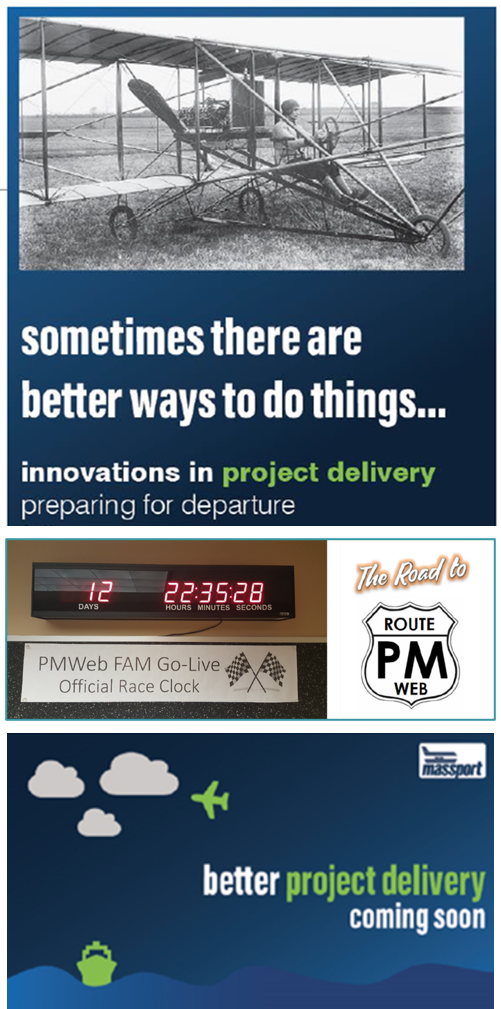
The review of stakeholders will determine the stakeholder groups and the level of communication required with each. A communication plan is developed to map the various ways in which each stakeholder group will be informed, including frequency, medium and feedback tools. Communication methods include emails, web pages, newsletters, posters and meetings/events.
Who needs training and how do we train them?
We work with each Client in the development of its Training Strategy and Plan. Clients know their people best. The training outcome to be driven from the strategy is to ensure all users have the skills and confidence they need to perform their jobs from the first day of Go Live. Components of a holistic approach for sustainable change include:
- Process and technical training – operation and function of new processes and work practices, including the new PPM Tool itself
- Behavioural training to support changes to data collection and reporting
- Skills and capability building to support people in changed or new roles that may be required to support the new system, such as data administration
- Knowledge transfer to allow maintenance and support of the new system, including documentation and updating know-how for processes, system and training materials
As part of developing the training strategy, we provide input to the Training Needs Analysis (TNA). A sound TNA is crucial to the development of a training solution that meets the unique needs and requirements of each implementation. Our own methodology can be used to help to understand the gaps between the current skill-set of the workforce and future requirements.
Ultimately, it is end-user acceptance that is one of the most important factors for the success of rolling out an application. We strive to provide the best and quickest support possible for the end users. This begins with the proper training and support of the Client’s team that will be in charge of management of the application. Our goal is to train the Client’s staff so that they can be as self-sufficient as possible.
Actual training is tailored to the specific needs of each group. Executive-level training, for example, is relatively straightforward and not particularly time-consuming, as the focus is on the opening screen, dashboards and reports. There is no requirement for training in data entry, document upload, workflow creation etc. Usually the Client will have one or two of its key personnel trained and these parties then pass on that information.
Are we “changing the rules” in the minds of our people?
This falls within the broader category of cultural change that can be required according to the nature and extent of a new software implementation. For effective cultural change – embracing the vision and new ways of working long term – there are a number of steps that need to be taken. Qualifications of HKA Tech change management personnel include certification by Prosci® (CCP – Certified Change Professional). Prosci® has published an article on the importance of cultural change that is recommended reading.
How do we measure the benefits we expect?
Formal benefits management is required by some Clients. There are a number of benefits that can be identified – some being easier to measure than others. Benefits management generally is an area many Clients avoid for a number of reasons. We work with Clients to determine what best suits their preferences and their willingness to allocate resources to the process. The three areas typically considered are:
- Financial – often linked to the business case for procurement of the new software. Criteria measured can include time savings to reduce labour costs and savings from a reduction in errors.
- Operational – improvement in process times, improved employee satisfaction.
- Usage – improvement in system use, tracked through the number of users accessing functionality, performing tasks with and without assistance, general adoption indicators. The WalkMe Digital Adoption Platform provides out-of-the-box tracking and reporting on these aspects.
Implementing the Plan
HKA has developed its approach to managing change based on its work with Clients in 500+ implementations – 300+ having been PMWEB implementations. In the vast majority of these implementations, OCM has been Client-led. Some Clients have followed specific industry-recognised processes, such as:
Prosci® ADKAR®
The ADKAR model is based on:
- Awareness
- Desire
- Knowledge
- Ability
- Reinforcement
Kotter’s 8-step model of change
Developed by Dr John Kotter (Kotter 8-step model), these steps being:
- Step 1: Create Urgency
- Step 2: Form a powerful coalition
- Step 3: Develop the Vision
- Step 4: Communicate the Vision
- Step 5: Empower Action
- Step 6: Create Short Term Wins
- Step 7: Build on the Change
- Step 8: Make Change Stick
One of HKA’s Clients, the Disney Organisation (through Walt Disney Parks & Resorts), presented its use of the Kotter 8-step model for its PMWEB implementation at a PMWEB User Conference, in a presentation titled Driving Change: Paving the Way with PMWeb. Disney personnel took the audience through the three phases in Kotter’s model of creating the climate for change; engaging & enabling the organisation; and implementing & sustaining for change.
Lippitt-Knoster Model
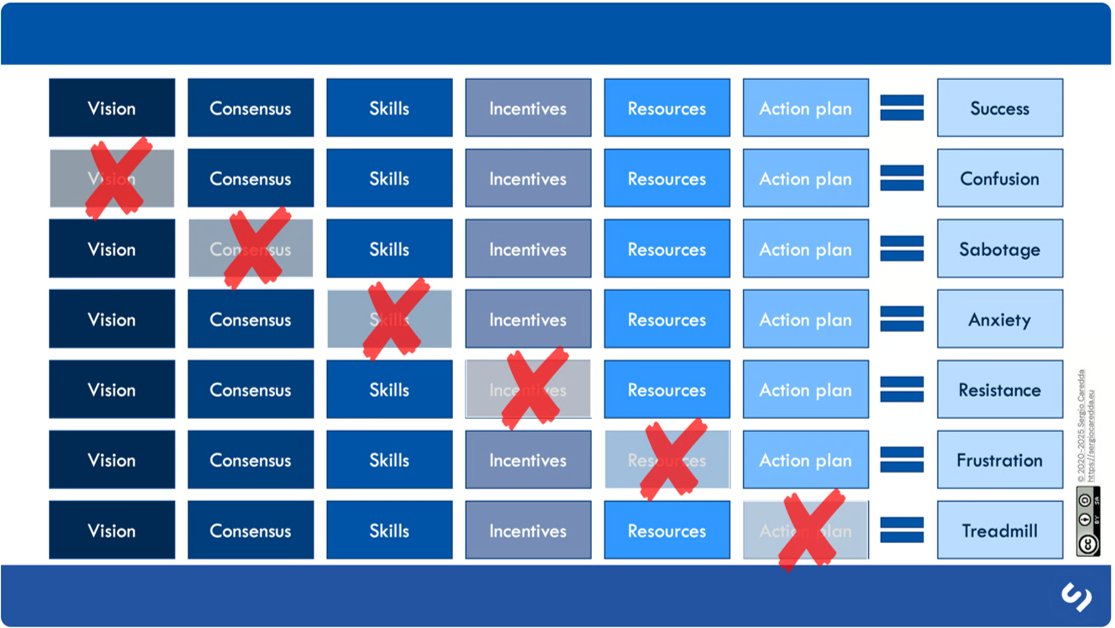
Developed by Dr Mary Lippitt and enhanced by Timothy Knoster, the Lippitt-Knoster Model demonstrates the six elements needed for change and the consequences of any one element being missing:
- Vision
- Consensus
- Skills
- Incentives
- Resources
- Action Plan
The impact of any one element being missing is shown in the following diagram:
Whether HKA is engaged to manage the change process or advise its Client on any aspect of change, we bring the necessary knowledge and experience gained through many hundreds of implementations – with the software and systems implemented by us having gained the trust of both end users and business leaders. Many of these Clients continue to engage HKA for its expertise as they pursue continuous improvement. Routine and sustainable change has become part of their culture.
Ready to Lead Lasting Change?
From advising your team to leading the full change program, HKA Tech brings proven OCM methodologies and the experience of hundreds of implementations to help your people adopt new systems with confidence.